Doctoral Dissertation – May 2024
Care underground: Activists and the transformation of American Dying in the 1960s

Who cares for the dying and the dead? My dissertation explored the racial politics of death care activism in the 1960s.
exhibition, Striving to Flourish: Intersectional Lived Experiences with Disability

Co-curated with Kenya Loudd. Drawn from community resources as well as Yale’s collections, the selections in this exhibition offer contemporary and historical perspectives on how people have navigated disability as it intersects with their other identities.
Co-organizer, Symposium on Disability and Accessibility

A week of panel discussions, research presentations, exhibitions, film screenings and more on the subject of disability activism, inclusion, equity, and liberation.
Interview, August 26, 2021, COVID-Calls
A conversation with Professor Scott Knowles – learn about death care activism prior to and during the COVID-19 pandemic.
Book Review, August 26, 2021, Los Angeles Review of Books

Invited Lecture, April 9, 2021 Death Doulas and the Struggle to Demedicalize Death

What does it mean to demedicalize death? In this talk, I described how a new category of non-medical death worker, the death doula, arose to address gaps within biomedicine at the end of life. From advising individuals about advance directives to sitting at the bedside to orchestrating home funerals, the modes of care and companionship offered by death doulas are varied.
.
Pop-up Exhibit, May 2019 Larry Kramer: Crisis and Care
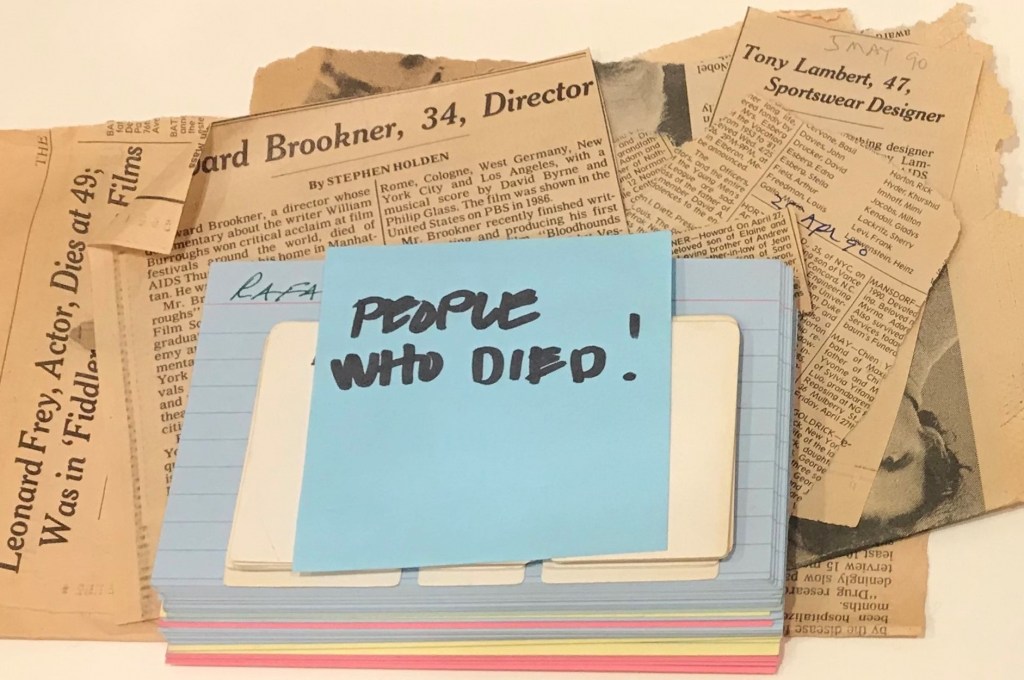
Drawn from the Larry Kramer Papers at Beinecke Rare Book and Manuscript Library and curated for, “Literary Biography: Archives and Life Stories,” a Master Class with Dr. Karin Roffman.
Presentation, June 20, 2019 Reclaiming the Dead: The Politics of Home Funerals

A growing alternative death care movement seeks to normalize conversations about death (Death Café), demystify dying and care of the dead (Ask A Mortician series), and offer guidance throughout the dying process (death doulas). This presentation situates these movements historically within a longer lineage of Black social and political activism.
Exhibit, August 2019-2020
Celebrating 10 Years of the Cushing Center

Dr. Cushing removed and preserved patients’ tumors and, after they died, their brains. These materials became the Cushing Brain Tumor Registry. While the collection was originally assembled to educate the medical elite, the Cushing Center opens the Brain Tumor Registry to the public from which it came. Co-curated with Terry Dagradi.
Presentation, Oct. 14, 2017
In Search of a “Good Nipple”: The Risk and Use of Lead Nipple Shields
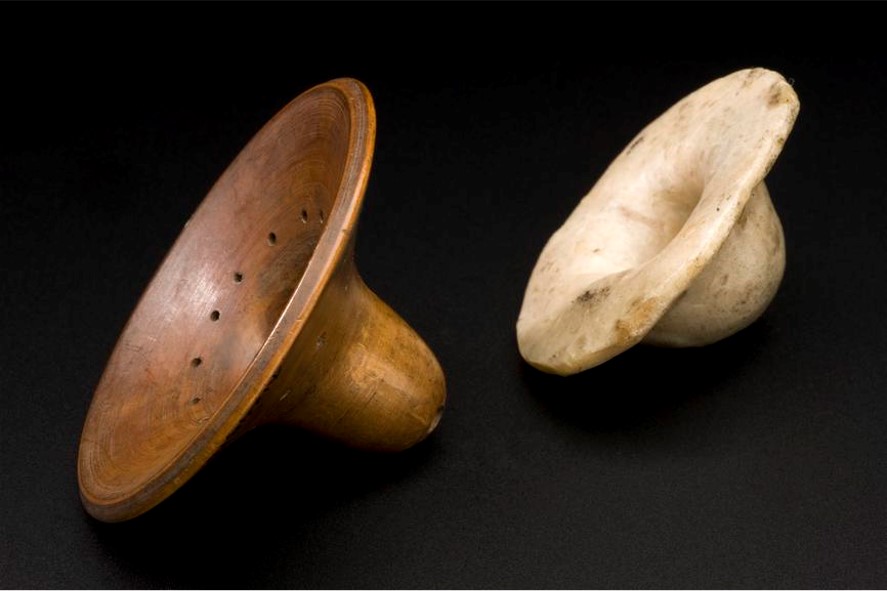
These tiny, protective nursing devices–in use since the 16th century–sparked an intense controversy that called into question the integrity of doctors’ and mothers’ knowledge about safe infant feeding
Presentation, May 3, 2019
Flight Nurses, Free Clinics, and Rock Medicine: LSD and Nursing, 1950-1975

What do nurses have to do with LSD? By developing specialized care protocols in LSD research and by staffing nontraditional, free clinics and emergency care tents, nurses have provided essential caregiving labor that has been overlooked in histories of nursing and assessments of the social impact of LSD.
Podcast, May 1, 2019
“Don’t Agonize, Organize!” Florynce “Flo” Kennedy, 1916-2000

A guest appearance on the Dead Ladies Show, recorded live in New York City. Radical Black feminist lawyer Flo Kennedy founded cross-movement coalitions, organized intersectional protests, and fought for justice in court on behalf of the Black Panthers and women’s reproductive autonomy—all while wearing her distinctive cowboy hat, pink sunglasses, and false eyelashes.
 Deborah Streahle